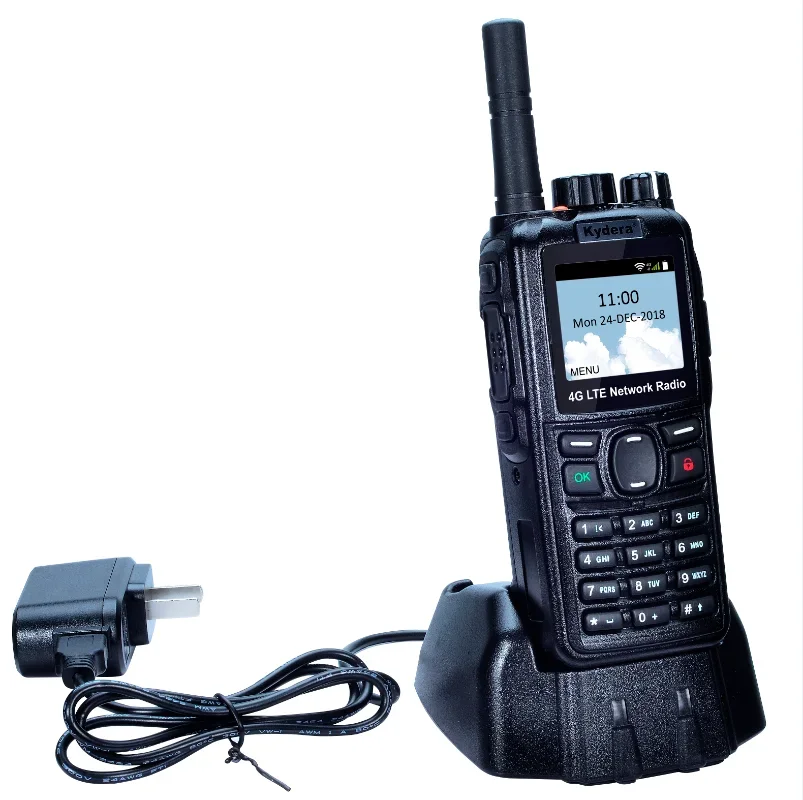
“Hello, hello, please respond!”—This familiar call, once accompanied by the crackling of static, was the most convenient instant communication method for security guards, drivers, and outdoor enthusiasts. Traditional analog walkie-talkies, long limited by power, antenna, and spectrum resources, typically had a coverage range of only 3-5 km. POC radios with SIM cards, through their built-in IoT cards, convert voice into data packets, which are then transmitted via telecom operator base stations, enabling nationwide and even international one-button communication in any area with cellular signal.
The usage methods differ
With traditional analog walkie-talkies, you simply turn them on, tune to the appropriate channel, and press the PTT button to make a call. With POC radios, after powering on, the IMSI and authentication key from the SIM card are first read to complete two-way authentication with the base station; only after successful authentication does the base station assign an IP address and establish a PDN bearer, providing a dedicated tunnel for subsequent data packets.
Voice IP-based
Slicing Sound Waves into Data Blocks. Analog phones rely on fixed frequencies for microphone access, leading to frequent crosstalk and eavesdropping. On the public internet, the moment a PTT call is pressed, the vocoder compresses the voice at 6-8 kbps, encapsulating it into an RTP packet every 20 ms, then adding a UDP/IP header to form a standard VoIP stream that can be transmitted in the packet domain. Even with thousands of users in the same group, there’s no interference. Want to add someone temporarily? Simply scan a code to join the group; no need to memorize frequencies or adjust sub-tones, even beginners can get started in ten minutes.
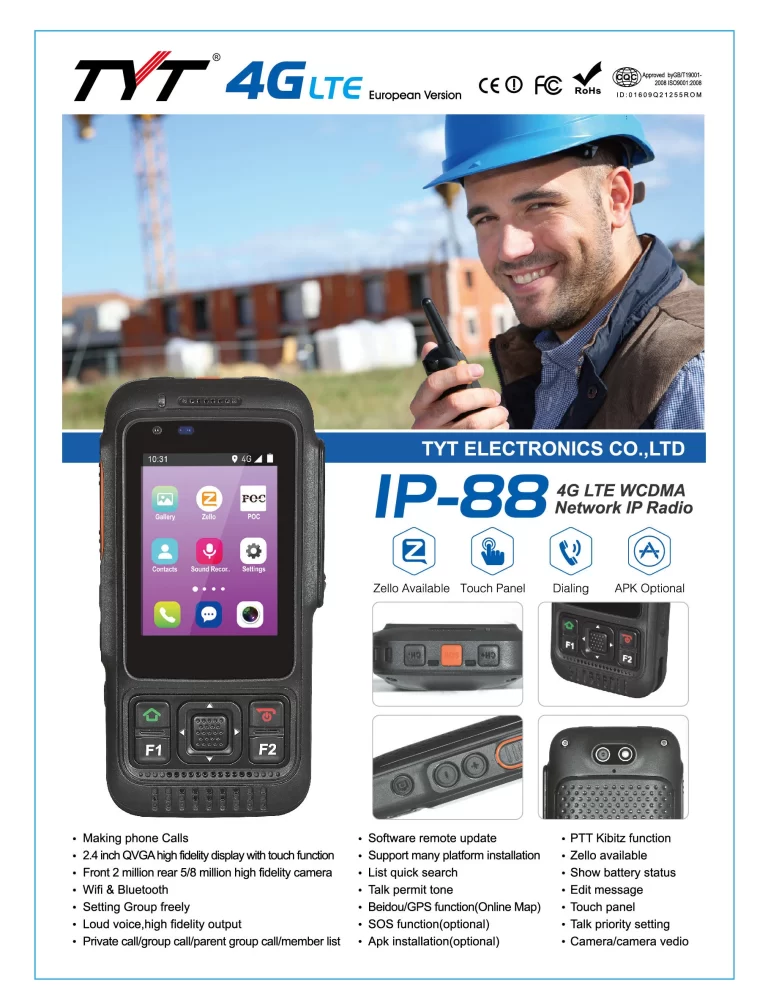
Small Antenna Size, Saving Space
Traditional handheld phones often have a long, thick external antenna to reach repeaters. SIM-based phones delegate communication to base stations, reducing the antenna size to the size of a thumb, allowing for larger battery capacity and easily exceeding 100 hours of standby time.
Security and Encryption: Two Layers of Protection
POC radios use a mobile network-built-in IPSec or TLS tunnel at the transmission layer; the application layer can further add AES-128 encryption to ensure that users on the same network cannot eavesdrop, and the device can be remotely shut down in the event of loss.
Data Usage Required
Unlike analog walkie-talkies, POC radios require a SIM card and annual data top-ups. However, in reality, the IoT walkie-talkie SIM cards provided by operators cost less than one cent per day on average; if converted to mobile data, one hour of high-definition voice calls only consumes about 3MB, which is cheaper than watching a short video. For intercity transportation, chain supermarkets, and scenic area inspections, the savings in repeater station, frequency approval, and manual maintenance costs can recoup the cost of the equipment within a year.
Disadvantages of POC radios
SIM card-operated walkie-talkies are not foolproof: they will lose network and sound during base station power outages, signal jamming, or massive crowds during major holidays.
Walkie-talkies with SIM cards replace traditional radio frequency links with cellular networks, expanding coverage from “kilometer-level” to “nationwide” coverage. However, this also introduces dependence on base stations and data traffic. Users should comprehensively evaluate network environment, platform openness, and power outage backup solutions when selecting a model to truly leverage its advantages of wide coverage, high efficiency, and low cost.
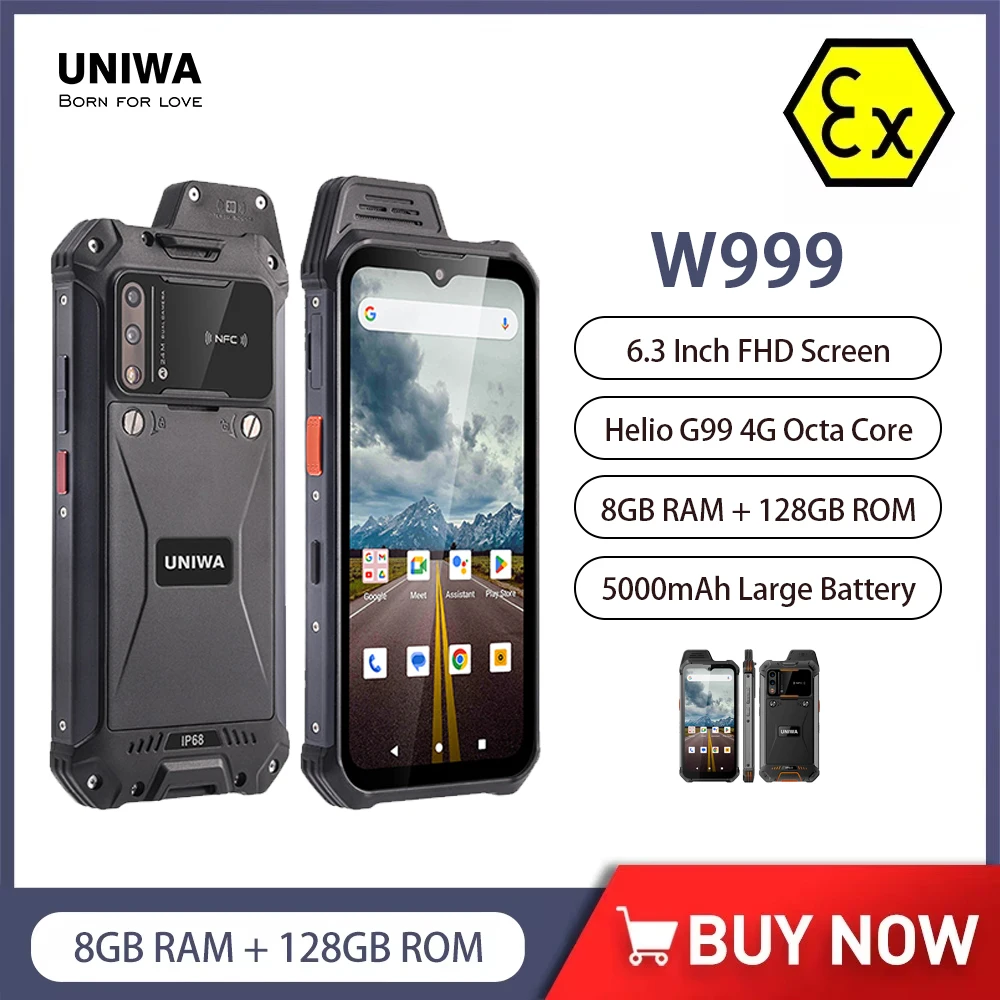
How to Choose a Good POC radio?
1. Network Support: Prioritize 4G full network compatibility to avoid customized models from some manufacturers that “only support one operator.”
2. Platform Openness: Clarify whether the backend can export call logs and integrate with your own dispatch software to avoid being “hijacked” by a brand’s proprietary platform.
3. Is the battery quick-release? Is the antenna replaceable? Does it include an aviation-grade charger, shoulder microphone, and car mount? Don’t underestimate these “peripherals”; in real outdoor all-day operation, details determine the experience.
4. Dual-mode is best: For scenarios with high reliability requirements (such as mines, fire fighting, emergency rescue, and other “life-or-death scenarios”), it is recommended to use narrowband digital or analog dual-mode walkie-talkies as a backup. Many of our professional users use the Kydera LTE-880G analog + public network dual-mode walkie-talkie, which can switch back to traditional frequencies with one click in critical moments, thus saving lives even when the network is down.