
Car enthusiasts often install vehicle radios for their travels, and antenna installation is a key consideration. When mounting a vehicle antenna, you need to take not only the car’s body structure into account, but also ease of daily use and anti-theft protection.
In fact, vehicle antennas are engineered with the entire car body in mind. The metal vehicle body, whose size is far larger than the wavelength of communication radio waves, serves as part of the antenna ground network. Therefore, different mounting positions will directly alter the antenna’s original electrical parameters and change the shape of its radiation pattern.
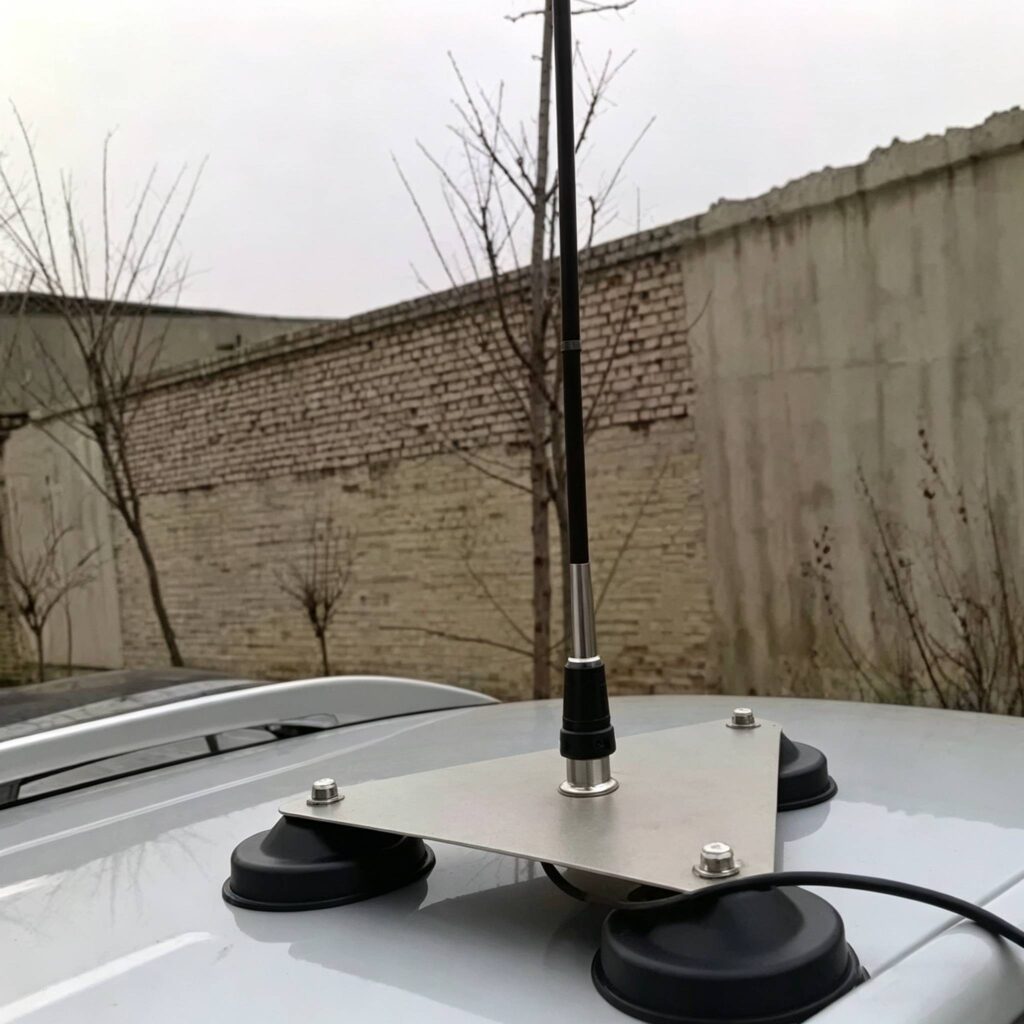
Theoretically, the optimal mounting position is the geometric center of the metal roof at the highest point of the vehicle body. This placement delivers the longest communication range and ensures balanced ground current flow in all directions for the antenna ground plane, achieving the best overall performance.
However, if the roof is equipped with a glass sunroof or a non-metallic soft canvas top, such areas must be avoided and kept clear. The main radiator element of the GP antenna should be installed vertically relative to the main horizontal metal surfaces of the vehicle and the ground, and kept away from other metal components on the car.
Considering aesthetics, driving safety and other practical factors, installing an antenna on the roof is often impractical. Depending on the vehicle model, select a mounting position that closely approximates the ideal installation condition.
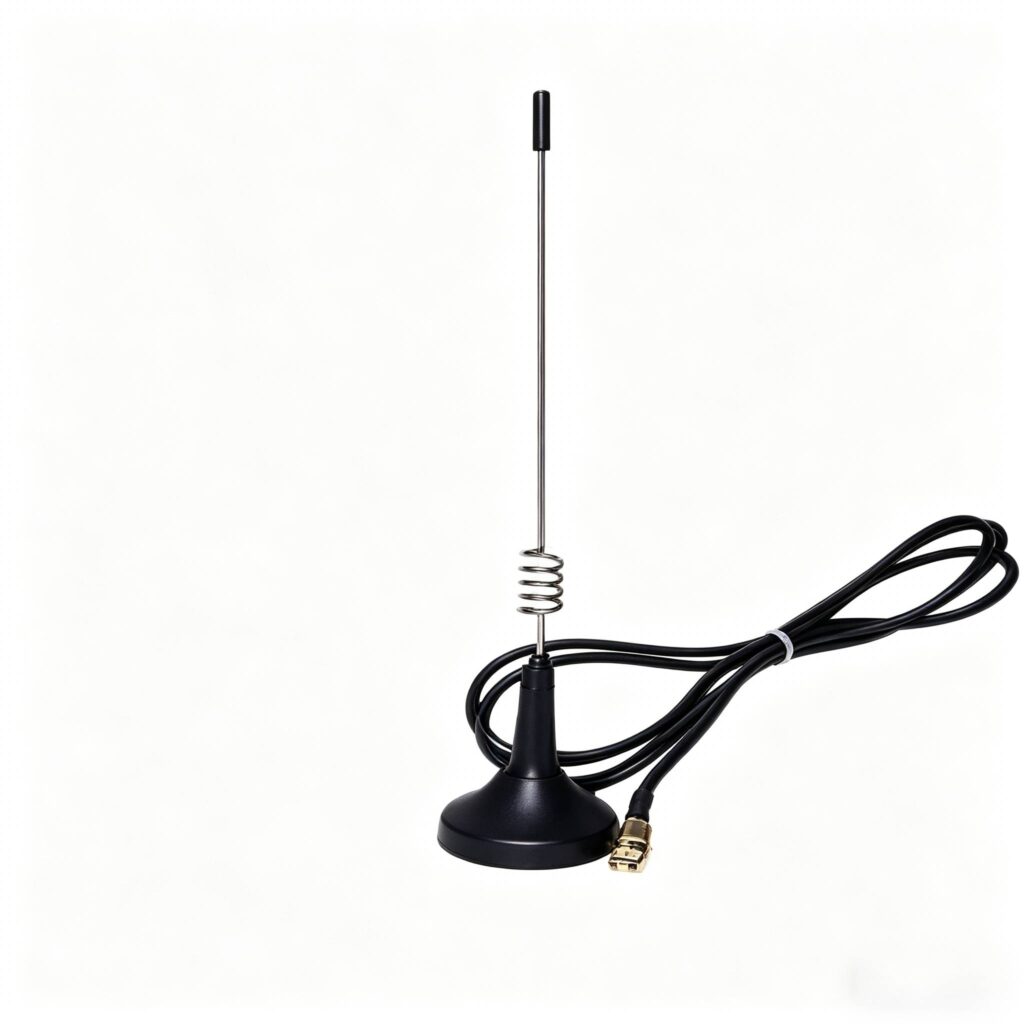
For vehicle antennas used temporarily or for short periods, a magnetic suction cup base is recommended for easy removal and installation. The suction cup adheres firmly to the roof surface through suction or vacuum pressure.
At high driving speeds, the antenna body generates significant wind resistance. If the suction cup base is undersized, there is a high risk of the antenna being blown off. For large and heavy antennas, a single suction cup may lack sufficient holding power. In this case, multiple suction cups can be used in combination to build a more stable and secure mounting base.
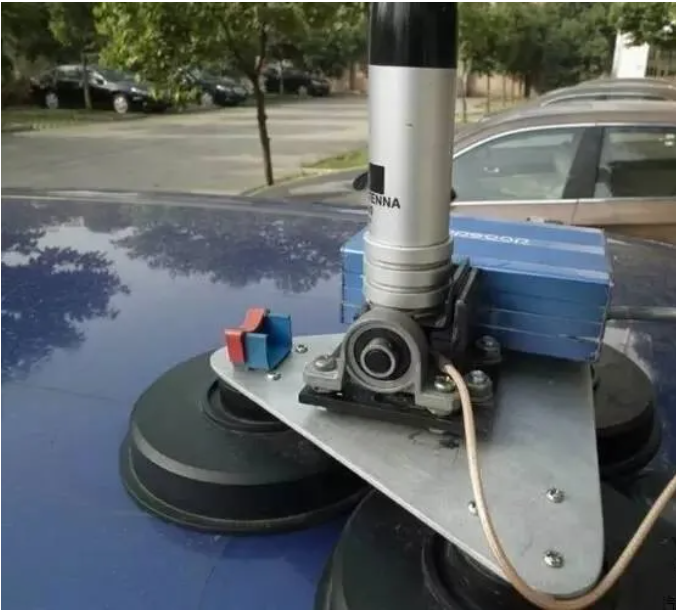
For long‑term use and reliable installation, dedicated clamps are the preferred solution. A wide range of specialized clamps are available to fit different vehicle models as well as fixing points of varying thickness and size.
Common mounting locations include the side edges of the front and rear hoods, rear door edges on hatchback vehicles, roof racks, roof gutter trim, and front or rear bumpers. Dedicated clamps fasten to the vehicle’s metal body by screw compression. Continuous vibration, jolting and impact during driving may damage the paint at the connection points. Combined with exposure to rain and sunlight, metal corrosion may also occur over time.
For this reason, proper protective measures should be taken during installation. After prolonged use, regular inspection and maintenance of the mounting areas are essential.
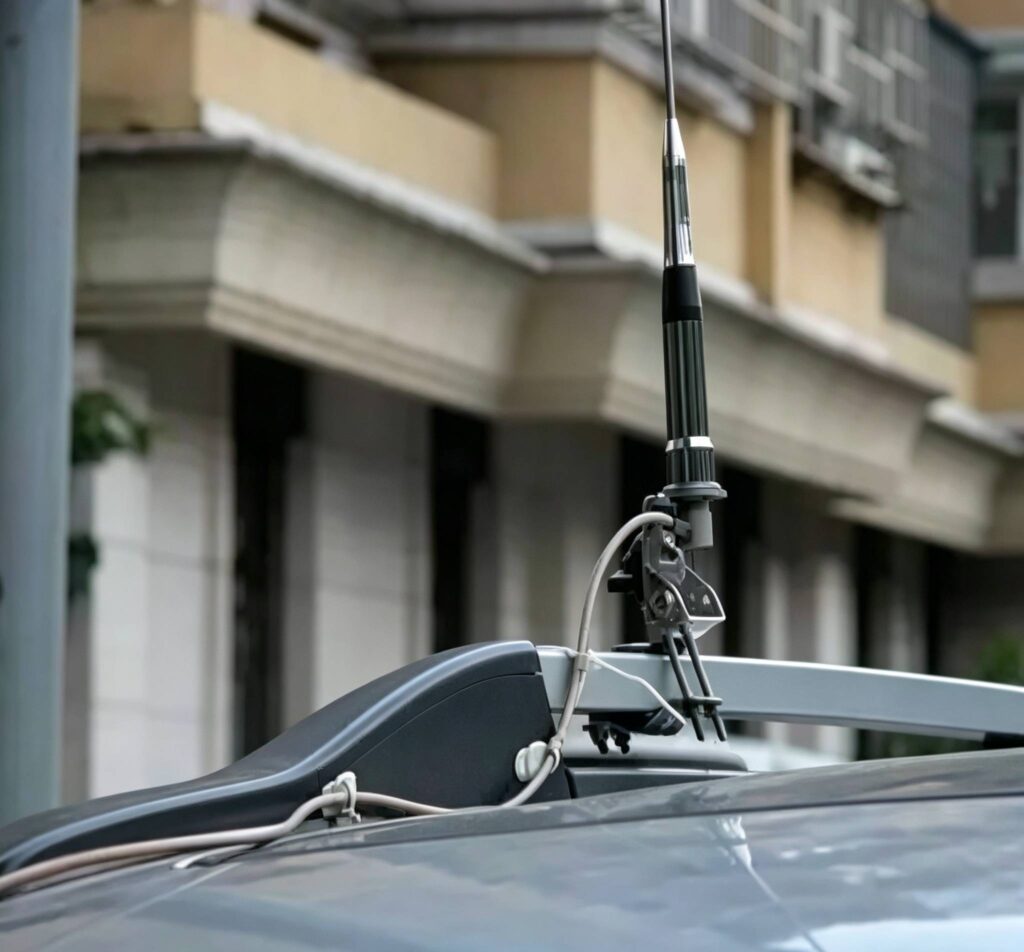
Whether vehicle antennas are installed with suction cup bases or dedicated clamps, they form antenna grounding contact points through distributed capacitance and direct crimping contact, establishing a high-frequency current path with the vehicle’s metal body.
However, due to the harsh operating environment of automobiles, the reliability of this grounding method is affected by numerous uncertain factors. To solve this problem, the most reliable solution is to lead out the grounding contacts at the antenna base with wires and connect them firmly to designated grounding points on the vehicle body. Some antenna suppliers offer prefabricated vehicle antenna grounding plates, which greatly simplify the installation process.
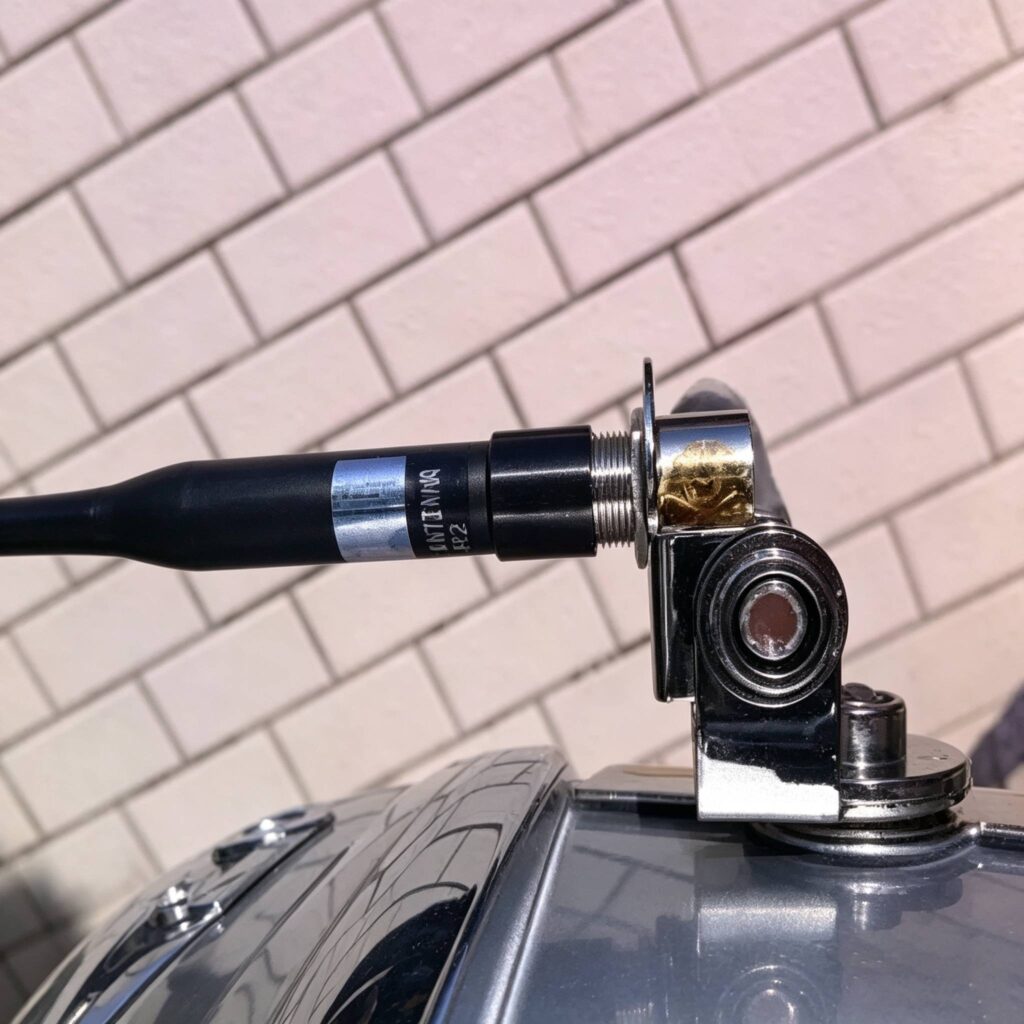
After installing an antenna on the roof, the vehicle’s passing ability will be severely restricted if it frequently enters low-clearance areas such as underground parking garages and overpasses. To resolve this issue, an antenna base with a folding function is highly recommended.
This type of base allows the antenna to switch between an upright working position for communication and a folded-down position for passing low-height obstacles. Before entering low-clearance sections, the antenna can be manually folded or retracted via in-car electric remote control. When driving on open roads with no height restrictions and communication is needed, the antenna can be restored to its upright state.
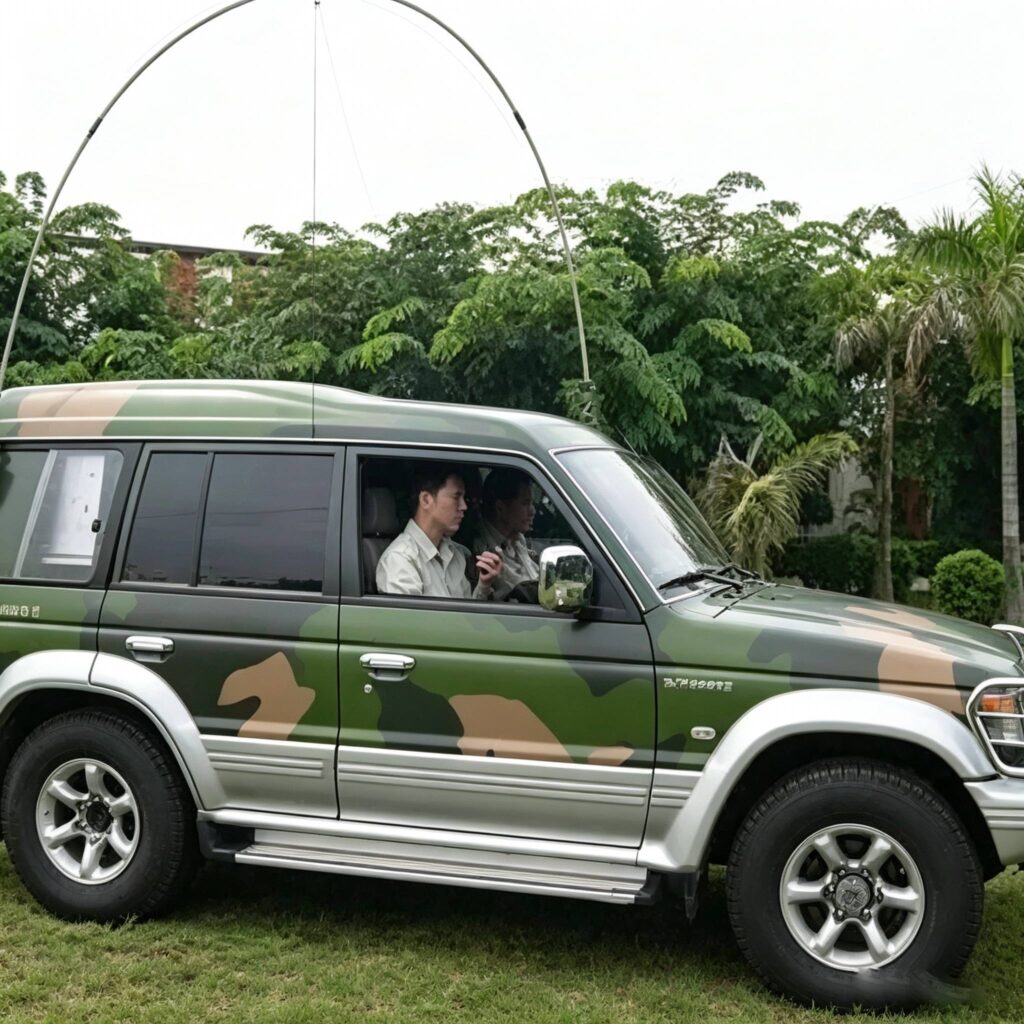
Select the thickest possible coaxial cable for the antenna feed line according to the distance between the exterior car antenna and the in‑vehicle radio, and route the cable following the principle of the shortest path.
When laying the feed line through gaps, narrow crevices and tight spaces, pay attention to friction points that may develop from long‑term jolting and vibration during driving. Secure or wrap the cable for protection at these vulnerable positions. When feeding the cable into the vehicle interior, take effective waterproofing measures at the entry point to prevent rainwater leakage.
Vehicle exterior equipment is constantly exposed to harsh conditions including strong sunlight, rain, frost, ice, dust and sand. For this reason, antenna bases with detachable plug‑style feed connectors are generally not recommended. This design is prone to poor connection caused by water intrusion and dust accumulation.
It is better to choose an integrated design where the antenna base and feed line are factory‑connected as a single unit. This structure greatly reduces the risk of antenna and feed line connection failures at the base.